Open a social feed for ten minutes and the world can appear to be collapsing in one very specific direction.
Everyone is furious. Everyone is talking about the same scandal. Everyone knows who caused it. Everyone except, curiously, the people sitting next to you at lunch.
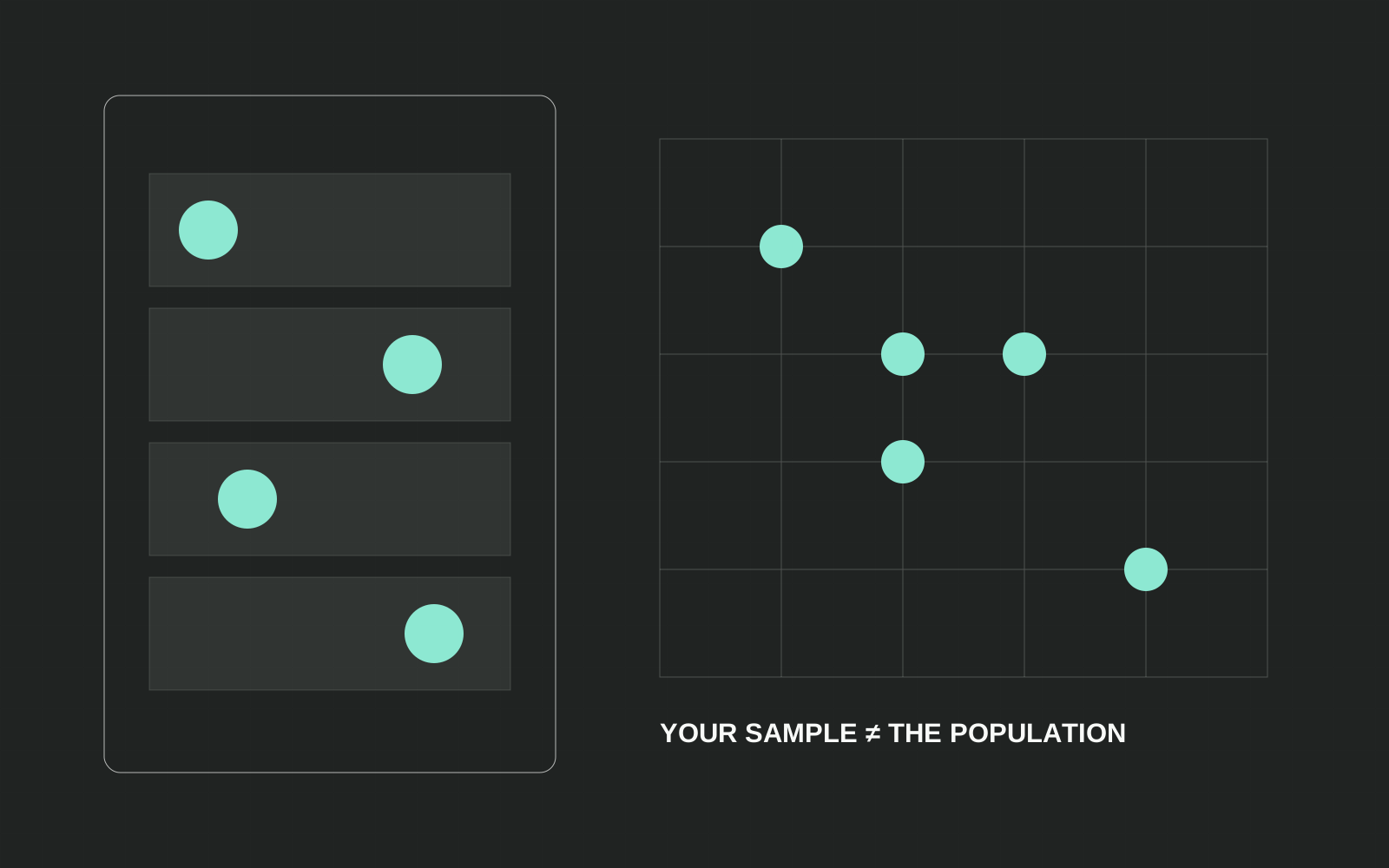
The mistake is treating a personalised feed as a survey.
Selection is not representation
Your feed is not randomly sampled from society. It is selected. The exact selection process varies by platform, but recommendations commonly use signals such as previous interactions, watch time, similarity, popularity and recency.
That means what you see is evidence of what the system expects to hold your attention. It is not automatically evidence of what most people believe.
This creates a peculiar epistemic illusion: repetition inside a personalised environment can look like social consensus.
Old human problem, new distribution system
Steven Pinker has pushed back against the idea that misinformation, conspiracy and collective irrationality were invented by social media. History rather decisively agrees with that part. Humans managed witch hunts, propaganda, panics and ideological madness without smartphones.
The more defensible concern is not that platforms invented irrationality. It is that they can alter its distribution speed, targeting, visibility and reward structure.
That is a more boring claim, which is probably why it deserves attention.
A three-question correction
When your feed appears to prove that “everyone” is talking about something, ask:
- Compared with what population? Your followers, a platform, a country, an age group, journalists, or three unusually productive accounts?
- How was this sample selected? Did you search for it, follow adjacent accounts, pause on similar videos or interact with arguments about it?
- What independent measure would show the same thing? Polling, election results, surveys, sales, public records or multiple unrelated datasets?
You do not need to distrust everything you see. You need to stop confusing relevance to your feed with prevalence in the world.