Jonathan Haidt’s The Anxious Generation offers a powerful story: childhood moved from play-based to phone-based, and the timing overlaps with a serious deterioration in adolescent mental health.
The story matters. So does the argument about whether the evidence proves the causal chain as strongly as the story suggests.
That disagreement should not be hidden. It is the interesting bit.
There are at least three separate questions
Public discussion frequently blends three claims together:
- Young people’s mental health has worsened.
- Smartphones and social media changed childhood substantially.
- Those technologies are a major cause of the mental-health deterioration.
The first two can be true without automatically proving the third.
A 2024 review by Amy Orben and colleagues describes the empirical literature connecting social-media use and adolescent mental health as mixed and inconsistent, while also laying out credible mechanisms through which platforms may amplify developmental vulnerabilities.
Candice Odgers, reviewing Haidt’s book in Nature, argues much more aggressively that the evidence does not support claims of a technology-driven epidemic, while still supporting substantial platform reform.
Meanwhile a 2024 systematic review and meta-analysis found weak associations for general social-media use with depression and anxiety, but stronger associations around problematic social-media use, poorer wellbeing and sleep problems.
That should immediately make us suspicious of one-variable explanations.
Two hours can describe completely different worlds
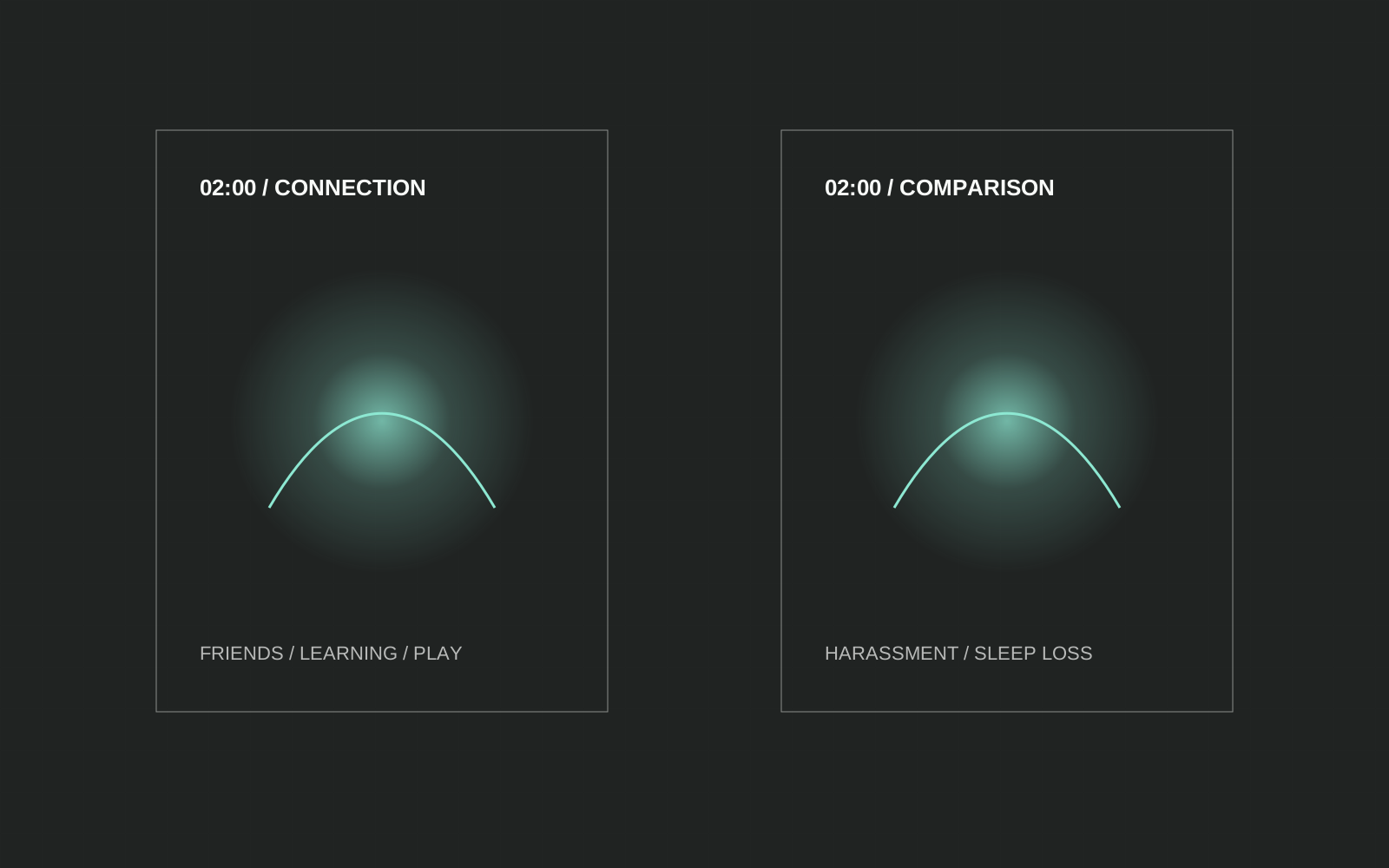
Imagine two teenagers who each spend two hours on a phone.
One spends forty minutes talking to close friends, thirty minutes learning digital drawing, twenty minutes organising football practice and thirty minutes watching comedy.
The other spends two hours moving between body-comparison content, anonymous harassment, self-harm material and an argument that keeps them awake past midnight.
“Two hours of screen time” is technically correct and scientifically unhelpful.
A better family question
Parents understandably want a number because numbers are actionable. But a better audit asks about function and consequence:
- What is the child doing?
- With whom?
- At what time of day?
- Does it displace sleep, exercise, face-to-face friendship or schoolwork?
- Does the child retain control over stopping?
- What happens to mood before, during and after use?
- Does the platform expose them to risks they are developmentally poorly equipped to manage?
This does not mean “anything goes”. Design matters. Age matters. Sleep matters. Compulsive patterns matter. Harassment matters. Social comparison matters.
It means the threat model should describe the threat.
The debate becomes more useful when we stop asking whether phones are good or bad and start asking which mechanisms produce which outcomes for which people.