The best moment to verify a claim is often the moment you most want to share it.
Anger, vindication, fear and amusement create urgency. Urgency removes friction. Removing friction is excellent product design and terrible epistemology.
Here is a small routine designed for real life rather than a media-literacy exam.
1. Reduce it to one claim
Ignore the caption’s mood. What exactly happened?
“They are hiding this” is not a claim. “The government removed document X on Tuesday” is.
Specific claims can be tested.
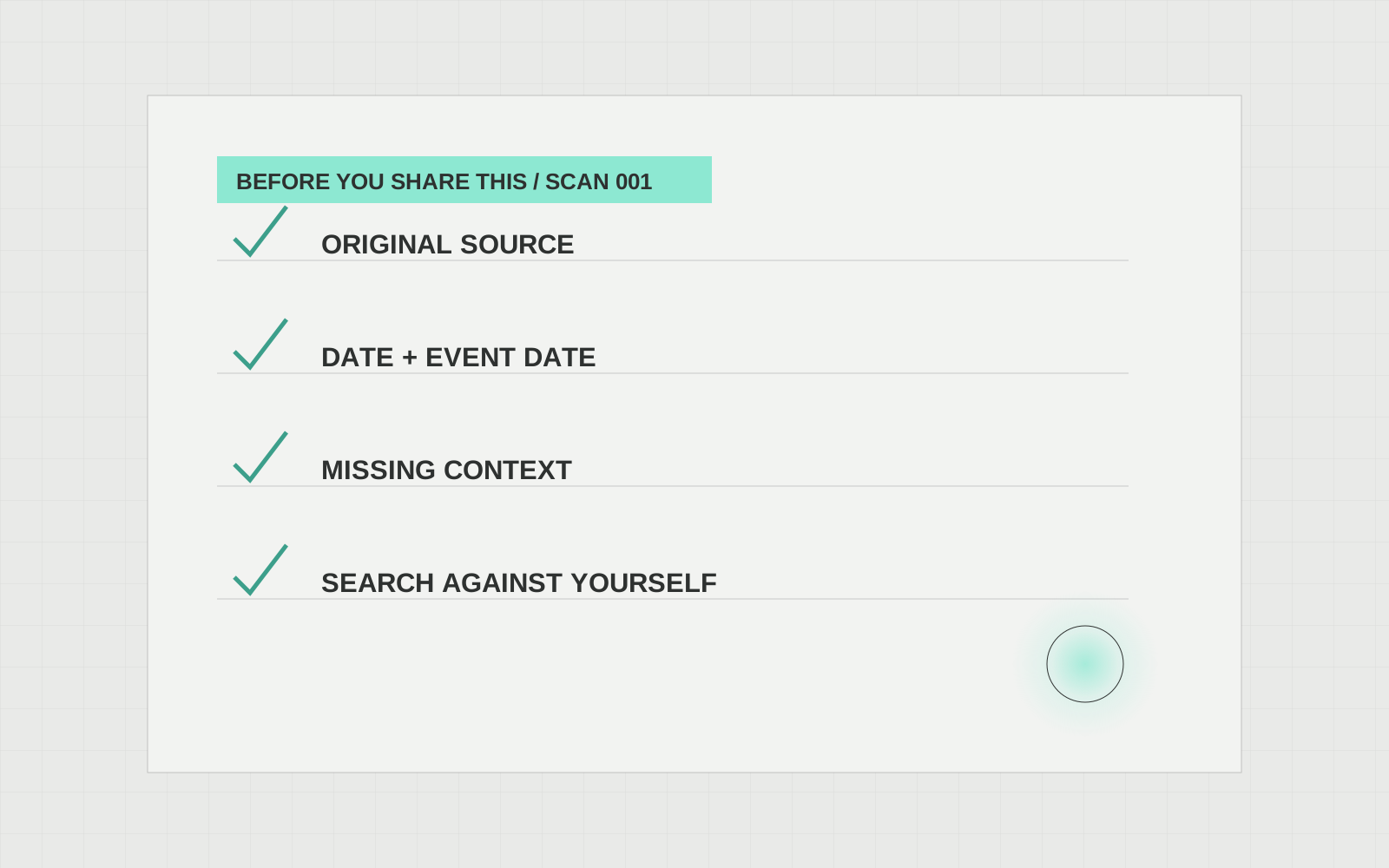
2. Find the original
A screenshot of a headline is not the article. A cropped video is not the event. A quote card is not the interview.
Move backwards until you reach the closest available primary source.
3. Check the clock
Old stories regularly return as new outrage. Verify the publication date and, separately, the date the event happened.
4. Look for missing denominator and context
“Cases doubled” could mean two became four. “Most people” may describe respondents in one unusual sample. A fifteen-second clip may begin five minutes into an argument.
Ask what information would change the emotional interpretation.
5. Search against yourself
Do one search designed to prove your preferred interpretation wrong.
This is deliberately uncomfortable. It is also one of the cheapest ways to detect motivated reasoning.
6. Decide whether sharing is useful
A claim can be true and still be shared in a misleading way. Ask what your post will cause the next person to believe.
Verification does not require becoming paralysed by uncertainty. It requires proportioning confidence to evidence.
That is slower than outrage.
Good.